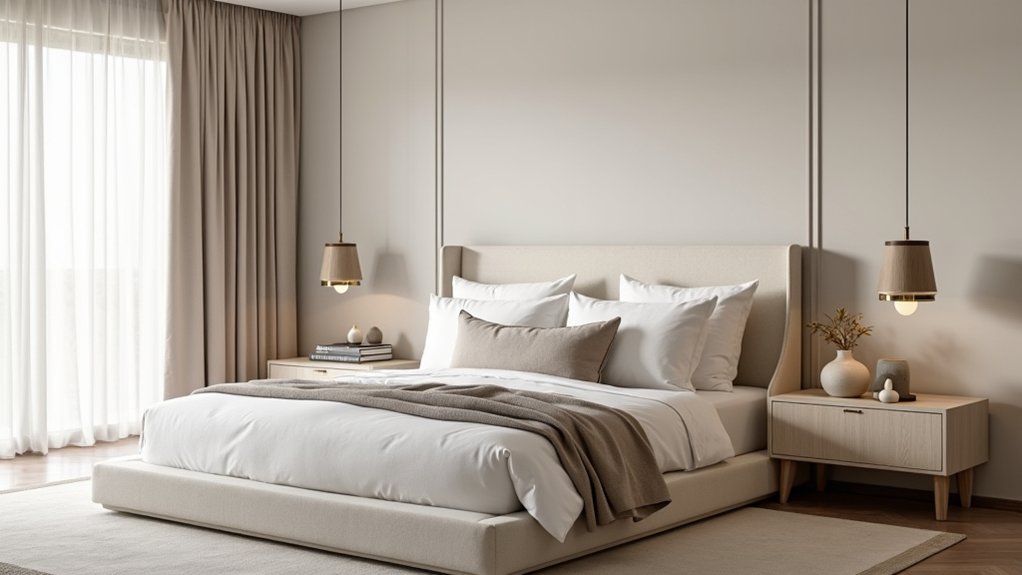
Your primary bedroom’s light exposure can shift muted blue, soft green, and warm neutrals more than you might expect, so test paint and fabric samples in morning and evening light before choosing a palette. From there, you can build a hotel-style retreat with breathable layered bedding, soft dimmable lighting, and storage that keeps surfaces clear. The key is balancing these practical choices with personal details—and one often-overlooked design decision can tie the whole room together.
Key Takeaways
- Choose a muted blue, soft green, or warm neutral as the dominant color, then coordinate accents in a restrained three- or four-color palette.
- Layer breathable sheets, a lightweight coverlet, and a removable duvet; add a few coordinated pillows for a polished, comfortable bed.
- Use warm, dimmable lighting around 2700K, combining a ceiling fixture with bedside lamps and subtle nighttime lighting.
- Reduce visual clutter with organized closet sections, labeled seasonal bins, and low-profile under-bed storage.
- Personalize the room with a few meaningful photos, ceramics, or books, repeating their colors or materials for cohesion.
Choose Calming Colors for Your Primary Bedroom
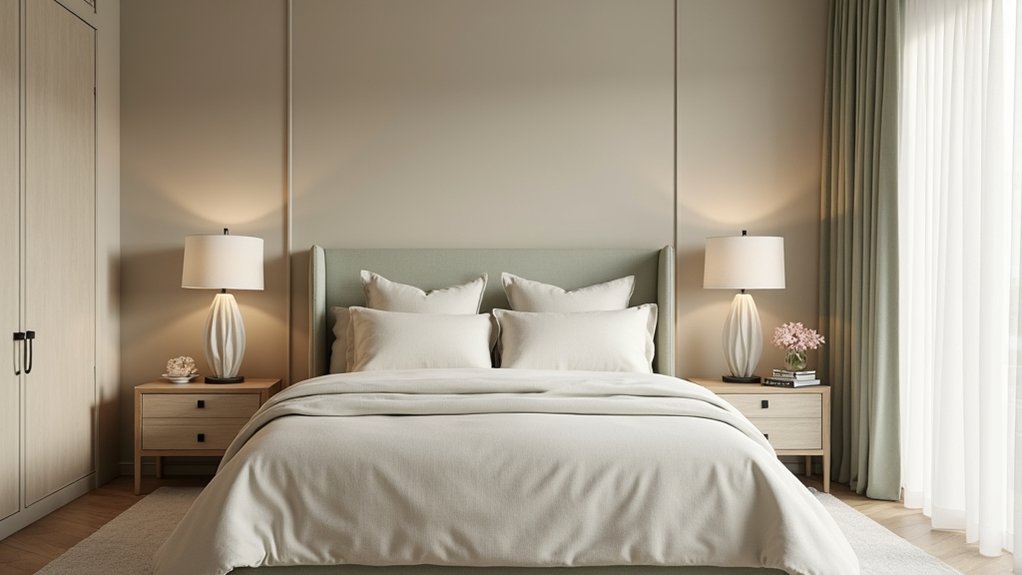
Choose a calming color palette to make your primary bedroom feel restful and cohesive. Use color psychology to guide your choices: muted blue can feel cool and quiet, while soft green can suggest balance. Warm neutrals, such as beige or greige, add gentle warmth without strong contrast.
Select one dominant wall color, then coordinate bedding, curtains, and accents in related shades. Your paint palette should include three or four colors: a main hue, a lighter tint, a deeper accent, and a neutral.
Check samples on multiple walls, since daylight and warm bulbs can shift how colors appear. View each sample in morning and evening light before committing.
For a hotel-style effect, keep finishes consistent and limit saturated colors to small accents. This creates visual continuity without making the room feel flat.
Add Storage to Keep Your Primary Bedroom Clutter-Free
To keep your primary bedroom clutter-free, assign storage to the items you use most. Start with Closet organization: group clothes by type, set aside a section for frequently worn pieces, and use shelf dividers to prevent stacks from shifting. Add matching hangers to improve visibility and make it easier to return garments to their proper places.
Store seasonal clothing in labeled bins on high shelves, keeping daily essentials within reach.
Use under bed storage for items you don’t need every day, such as spare linens, luggage, or off-season accessories. Choose low-profile containers with lids to limit dust, and measure the clearance beneath your bed before buying them.
A storage bench or dresser can hold smaller items while keeping surfaces clear. Assign each container a specific category, and return items after use so clutter doesn’t accumulate.
Review contents every few months and remove anything you no longer need.
Layer Bedding for Comfort and a Polished Look
Layer bedding to adjust warmth, add texture, and give your primary bedroom a finished look. Start with a fitted sheet and a breathable top sheet, choosing cotton percale for a crisp feel or sateen for a smoother finish.
Add a blanket or coverlet for lightweight warmth, then place a duvet in a removable cover so you can change layers with the season. Choose luxury linens that suit your preferred temperature and are easy to launder.
For a neat finish, center the duvet, smooth the top sheet, and fold the upper edge over the cover. Add decorative pillows in varied sizes, limiting the number so you can remove them quickly at bedtime.
Keep colors within a coordinated palette, and mix one subtle pattern with solid fabrics to create depth without visual clutter.
Use Soft Lighting to Create a Relaxing Mood
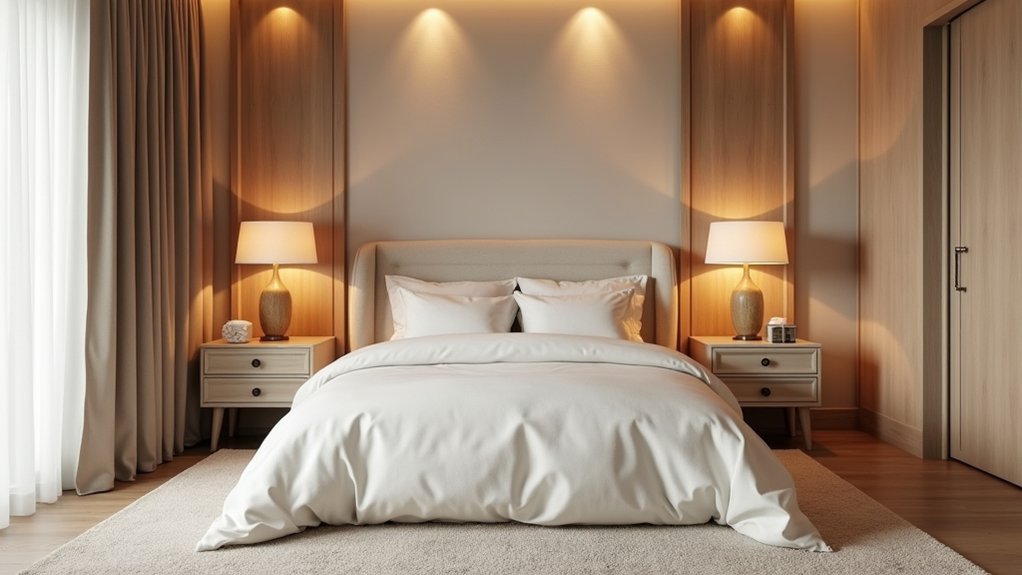
Soft, layered lighting can make your primary bedroom feel calmer while supporting reading and other tasks. Start with a warm, dimmable ceiling fixture for general illumination, then add ambient lamps near the bed to reduce harsh contrast.
Choose bulbs around 2700K to create a warm tone, and check the manufacturer’s guidance to confirm they work with your dimmer switches.
Place bedside lamps so you can reach their controls without leaving the bed; adjustable shades help direct light onto a book without shining into your eyes.
For nighttime movement, use a low-level light near the floor rather than turning on the full overhead fixture.
Keep each light on a separate switch or control, so you can adjust brightness by activity.
Test the setup after dark and reposition fixtures if glare or shadows interfere with comfort.
Add Personal Touches to Make the Space Yours
Personal touches make your primary bedroom feel distinctive without compromising comfort or function. Choose personalized decor that supports the room’s palette, scale, and purpose. A framed photograph, locally made ceramic, or favorite book can add character without creating visual clutter. Limit display items to a few meaningful pieces, and leave clear surfaces for daily use.
Use sentimental accents selectively. Place a keepsake on a dresser or hang artwork that reflects an important memory, then balance it with simpler furnishings. For a cohesive look, repeat one color or material from the accent elsewhere in the room. Secure heavier frames with appropriate wall anchors, and keep fragile objects away from bedside edges.
Edit your selections seasonally or when your needs change; you’ll preserve a calm, hotel-style atmosphere while making the space unmistakably yours.
Frequently Asked Questions
What Mattress Size Is Best for a Primary Bedroom?
A king mattress usually suits your primary bedroom best if you share it and have room; choose queen for tighter layouts. Check dimensions, door clearance, bedding materials, and mattress toppers before buying to guarantee everything fits comfortably.
How Much Space Should You Leave Around the Bed?
Leave 30–36 inches around your bed; apparently, comfort needs room to breathe. You’ll want at least 24 inches for tight layouts, but wider paths improve access, accommodate furniture, and let Color schemes and Lighting options shine.
Should a Primary Bedroom Include a Seating Area?
Yes, add a seating area if you have enough floor space without restricting bed access or closet organization. Choose compact chairs, preserve clear walkways, and include bedside lighting so you can read comfortably without cluttering the room.
What Flooring Works Best in a Hotel-Style Primary Bedroom?
Choose luxury hardwood for durability and easy cleaning, then add plush carpet beside your bed for warmth—your own red-carpet welcome. You’ll get a polished, hotel-like finish while keeping high-traffic areas practical and comfortable underfoot.
How Can You Improve Privacy in a Primary Bedroom?
You can improve bedroom privacy by installing lined window treatments that block sightlines and light, then positioning room dividers to screen doorways or dressing areas. Add privacy film to exposed windows, and secure locks for added control.
Conclusion
A calm, hotel-style primary bedroom comes from a few deliberate choices: test muted colors in morning and evening light, conceal everyday clutter, layer breathable bedding, and use dimmable lamps for a softer nighttime glow. Then add one or two personal objects that make the room feel like yours. Sleep matters: adults need at least seven hours nightly, according to the CDC. Make your bedroom support that goal, and you’ll create a retreat that feels restorative—not merely polished.