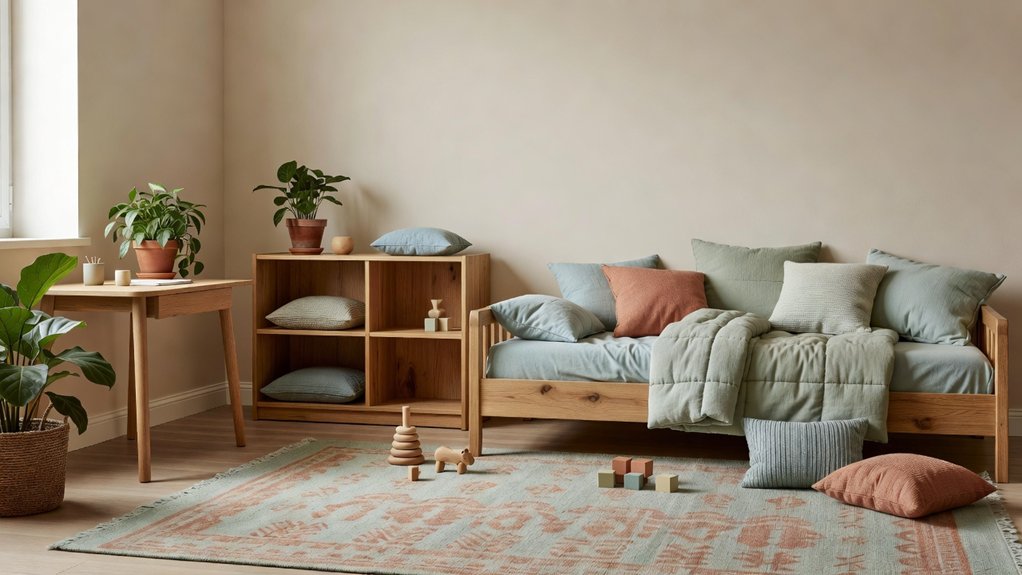
You can design a child’s bedroom to feel personal now and still work as their tastes change. Start with adaptable wall colors, natural wood, and versatile furniture. Then bring in brighter shades and current interests through bedding, artwork, and rugs—items that are easier to update than a full room design. The key is choosing which colors to keep as a steady foundation and which to refresh over time. For help creating a flexible plan, you can consult Property Sisters Interiors.
Key Takeaways
- Choose neutral colors for walls and larger furniture, then add muted blues, greens, or warm yellows through accents that are easy to update.
- Test paint samples in several spots and at different times of day to see how the color changes with the light.
- Choose durable, washable, low-VOC paint in an eggshell or satin finish to make walls easier to clean.
- Let your child personalize the room with bedding, pillows, rugs, and artwork. Balance brighter colors with calming tones to keep the space comfortable.
- Refresh the palette over time by changing textiles or repainting a small piece of furniture, while keeping the layout practical and uncluttered. For help choosing colors that can grow with your child, consult Property Sisters Interiors.
Choose a Flexible Colour Palette for Your Child’s Bedroom

Choose a flexible color palette that can grow with your child’s changing tastes. Start with a few complementary shades, then add accents through bedding, artwork, and accessories. That way, you can refresh the room without replacing larger pieces.
Muted blues and greens can create a restful feel, while warm yellows can bring energy to a play area. Balance brighter colors with soft neutrals, and use contrast thoughtfully to keep the room lively without making it feel busy.
You can also give each area a clear purpose and invite your child to choose a favorite accent color to repeat in a few easy-to-change details. For help creating a cohesive, adaptable palette, Property Sisters Interiors can offer expert guidance.
Pick Wall Colours That Last Beyond the Nursery Years
Because wall color is harder to change than bedding or accessories, choose a shade that can grow with your child. Soft neutrals, muted greens, and gentle blues create a calm backdrop without feeling tied to a particular age. Notice how natural light changes throughout the day, and test samples on multiple walls before committing.
Color psychology can offer a helpful guide: cooler tones often feel restful, while warmer shades can make a room feel welcoming.
For easier upkeep, consider a durable, washable eggshell or satin finish. Check the label for low-VOC options, and follow the manufacturer’s instructions for ventilation and drying time.
A thoughtful wall color can keep the room feeling polished as your child grows. If you’d like help choosing a lasting palette, Property Sisters Interiors can offer expert guidance.
Add Your Child’s Style With Changeable Colour Accents
Once the walls provide a lasting backdrop, bring in your child’s personality with accents that are easy to update. Choose bedding, cushions, rugs, and artwork in colors your child loves, while keeping larger pieces neutral. These smaller touches add energy without committing you to a costly color scheme.
Invite your child to choose a few accents, then balance brighter hues with calmer tones to keep the room restful.
Arrange colorful pieces with intention: group cushions on a reading chair or echo a rug’s color in nearby artwork. Lighting can add character, too. A colored lamp base or shade brings a playful touch, while warm, adjustable light supports reading and winding down.
Choose accents that are easy to move, wash, or replace, and keep surfaces clear for play and everyday use. For help pulling the look together, Property Sisters Interiors can offer expert guidance.
Refresh Bedroom Colours as Their Interests Change
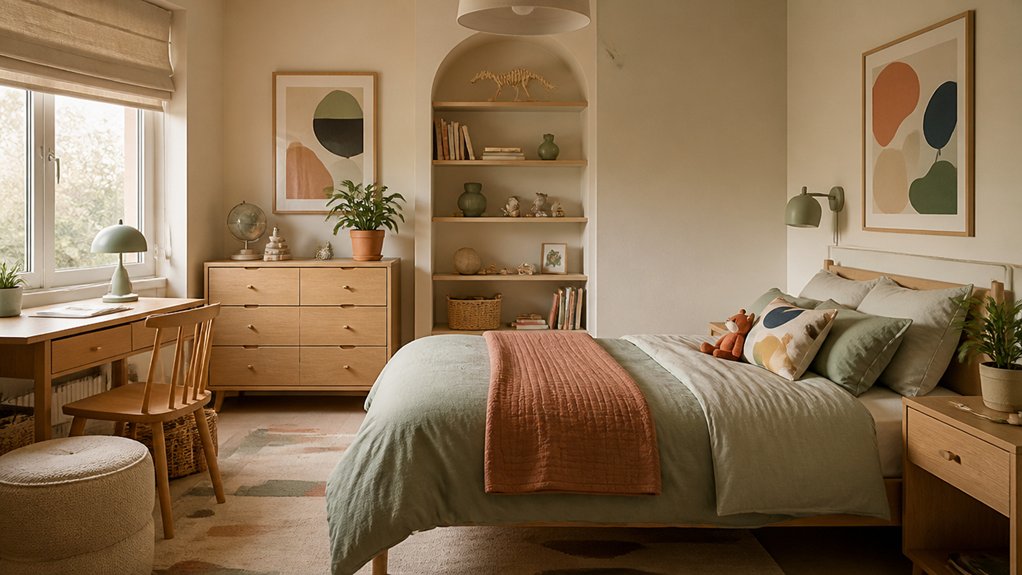
As your child’s interests change, refresh the bedroom with small colour updates instead of a full redesign. Swap pillow covers, bedding, or a washable rug to introduce a new palette while keeping durable pieces. Choose one or two shades inspired by their current interests, then balance them with neutral walls and wood tones for a cohesive look.
For a more noticeable change, repaint a small feature such as a shelf or bedside table. Before buying anything, review the furniture layout and look for surfaces that can add colour without making the room feel crowded. Consider how daylight and warm bulbs affect the appearance of paint and textiles.
Invite your child to choose accents, while guiding them toward colours that complement existing finishes and can adapt as their interests evolve. For help pulling the room together, Property Sisters Interiors can offer expert guidance.
Frequently Asked Questions
How Can Colour Affect a Child’s Sleep?
Color can influence how calm or stimulating your child’s bedroom feels, which may affect their bedtime routine. Soft blues, greens, and warm neutrals can create a more restful atmosphere, while very bright or high-contrast colors may feel energizing. For help choosing a soothing palette, you can consult Property Sisters Interiors.
Which Paint Finishes Are Easiest to Clean?
Satin and semi-gloss finishes are typically easiest to clean, making them practical choices for busy walls, trim, and other high-touch areas. Look for durable, washable paint that can handle gentle scrubbing, and consider a low-VOC formula to help support healthier indoor air. For help choosing the right finish, reach out to Property Sisters Interiors.
Are Low-Voc Paints Safer for Children’s Bedrooms?
Yes. Low-VOC paints typically release fewer volatile organic compounds (VOCs) than conventional paints, which can help improve your child’s bedroom air quality. They aren’t emission-free, though. Look for products with reputable third-party certifications, ventilate the room during and after painting, and follow the label’s guidance before letting your child sleep there. For help choosing a suitable paint, contact Property Sisters Interiors.
How Can I Test Paint Colours Before Committing?
Test paint colours on large sample boards rather than tiny swatches. Natural light and artificial lighting can change how a colour looks throughout the day, so move the boards around the room and check them in different spots and at different times. Compare undertones and how each shade works with your furnishings before choosing a favourite. For help narrowing down your options, reach out to Property Sisters Interiors.
What Lighting Works Best With Different Bedroom Colours?
Warm, dimmable lighting works well with most bedroom colors, while cooler bulbs can bring out the crispness of blues and greens. For a cohesive look, choose bulb warmth that complements your palette and layer your lighting with bedside lamps and ceiling fixtures. For help choosing the right options, contact Property Sisters Interiors.
Conclusion
Choose a flexible palette, and your child’s room can grow with them without requiring a full redesign every few years. Keep the walls and larger furniture pieces in calm, versatile colors, then bring in brighter shades through bedding, artwork, and accessories. The less you design around a fleeting phase, the more room there is for your child’s personality to shine. When their interests change, swap a few accents to refresh the space while keeping its restful foundation. For help choosing colors and finishes that can adapt over time, Property Sisters Interiors can offer expert guidance.