
A reclaimed door or floor brings a history and character that new materials can’t replicate. Start with a reputable salvage yard, and check each piece’s condition, dimensions, and material before you buy. Thoughtful repairs, proper installation, and simple modern finishes can preserve its patina while helping it feel at home in your space. Pay close attention to hidden damage and fit—a detail that’s easy to miss can lead to costly repairs. For help choosing or restoring reclaimed materials, Property Sisters Interiors can offer expert guidance.
Key Takeaways
- Source doors and flooring from reputable salvage yards or reclamation dealers. Ask about each piece’s history, condition, storage, and suitability for your project.
- Confirm dimensions, wood species, and thickness. Make sure doors fit their openings and flooring works with the subfloor, expected foot traffic, moisture conditions, and transitions.
- Check for rot, cracks, insect damage, warping, and loose joints. Older materials may also contain hazardous substances, so get a professional assessment if you’re unsure about safety.
- Restore gently: test cleaning products in an inconspicuous spot, repair joints with matching wood, and preserve original hardware when practical. Let reclaimed flooring acclimate to the room before installation.
- Let the wood’s grain and patina take center stage with restrained finishes, balanced colors, and a thoughtful layout. Plan for flooring expansion gaps, and consult Property Sisters Interiors for expert help with sourcing, restoration, or styling.
Choose Reclaimed Doors and Floors for Your Home
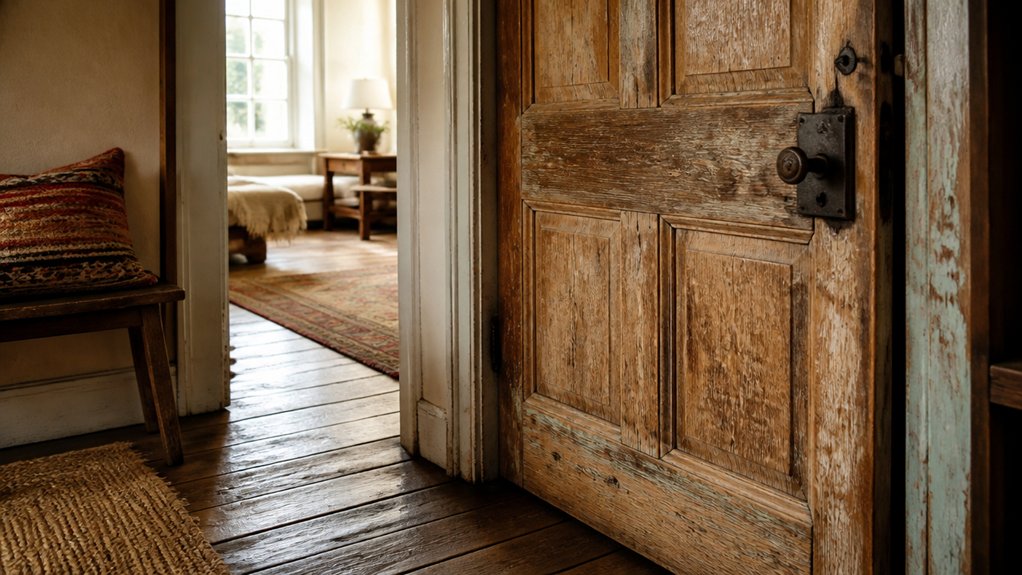
Reclaimed doors and floors bring history, character, and enduring materials into your home. Choose pieces that suit your layout, daily routines, and design goals. A solid wood door can become a distinctive focal point, while reclaimed flooring can add warmth and visual continuity to adjoining rooms.
Before buying, check each piece’s dimensions, condition, and compatibility with your home. Confirm that doors will fit their openings and that floorboards are suitable for the room’s foot traffic and moisture levels.
If you plan to combine boards, look for consistent thickness, and consider how their existing marks, grain, and color will work with your furnishings.
Reclaimed materials add vintage charm without making a room feel staged. Reusing sound timber can also reduce demand for newly harvested wood.
Choose finishes and hardware that preserve the material’s character while supporting comfortable, practical everyday use.
For help selecting and incorporating reclaimed pieces, consult the experts at Property Sisters Interiors.
Find Reclaimed Doors and Flooring From Reliable Sources
Start your search at architectural salvage yards, where you can inspect reclaimed doors and flooring in person.
Compare established reclamation dealers for quality, selection, and clear condition reports.
Before buying, ask about each item’s provenance, condition, and suitability for your project.
If you’d like help choosing pieces that fit your home and design, Property Sisters Interiors can offer expert guidance.
Architectural Salvage Yards
Architectural salvage yards are a practical place to find reclaimed doors and flooring with character and history. Seeing pieces in person lets you compare wood species, finishes, dimensions, and wear—and judge how each might work in your home.
Ask staff about a door’s original use, alterations, and damage that could affect installation. For flooring, check board thickness, tongue-and-groove edges, and whether enough matching material is available for your project.
Bring measurements, photos, and a clear design plan rather than relying on visual estimates. Look for vintage hardware that suits the door’s age and style, and ask how the yard protects stored materials.
Inspect items in good light, test moving parts, and confirm what cleaning or repairs they’ll need before you buy. For help choosing and incorporating salvage pieces, Property Sisters Interiors can offer expert guidance.
Reputable Reclamation Dealers
Reputable reclamation dealers can help you find reclaimed doors and flooring with clear provenance and dependable quality. Look for specialists who describe each piece accurately, answer questions directly, and offer practical guidance on dimensions, condition, and installation.
Their experience can help you match a door’s proportions or a floor’s patina to your home’s architecture while keeping everyday function in mind.
Ask how the dealer grades wear, handles repairs, and prepares materials for sale. Request clear photos and measurements, and confirm the return policy before you commit.
A thoughtful supplier won’t pressure you to buy; they’ll help you compare options and plan for fitting or refinishing. Browse the inventory for details that support your design, such as antique hardware or traces of vintage paint.
If you’d like help choosing materials that suit your home, Property Sisters Interiors can offer expert guidance. A reliable dealer makes it easier to select, plan, and incorporate reclaimed pieces with confidence.
Verify Material Provenance
A dealer’s description is only as reliable as the records behind it. Ask where each door or floorboard came from, when it was removed, and how it was stored. Request invoices, site records, photographs, or salvage permits that link the material to its original building. This helps you distinguish genuine architectural salvage from newer stock made to look old.
Check the piece against the story. Saw marks, paint layers, fasteners, and wear should be consistent with its claimed age and use. Ask whether the boards were reclaimed as a complete lot or mixed with newer replacements.
Confirm the wood species, dimensions, and any treatments before you buy, since these details can affect restoration and installation. Keep the records with your project notes to preserve the material’s history and guide your design choices.
If you’d like help assessing a find, Property Sisters Interiors can offer expert guidance.
Check Fit and Materials Before You Buy
Before buying reclaimed doors or flooring, make sure each piece fits your space and can be installed safely. Measure door openings for width, height, and thickness, and check swing clearance. Compare those measurements with the door slab and its hardware.
For flooring, calculate the area you need and confirm the boards’ width, thickness, and coverage. Allow extra material for cuts and your chosen layout. Also check subfloor height and transitions so the finished floor meets adjoining rooms smoothly.
The wood species and finish affect both performance and appearance. Consider how they’ll look with your room’s lighting, existing trim, and desired contrast. Ask whether the pieces can be trimmed or refinished without losing the character you want, and confirm your installer can work with their dimensions.
Request samples or detailed measurements before committing. For help assessing fit, materials, or installation, you can consult Property Sisters Interiors. A few careful checks can help your reclaimed materials feel right at home.
Inspect Reclaimed Pieces for Damage and Safety
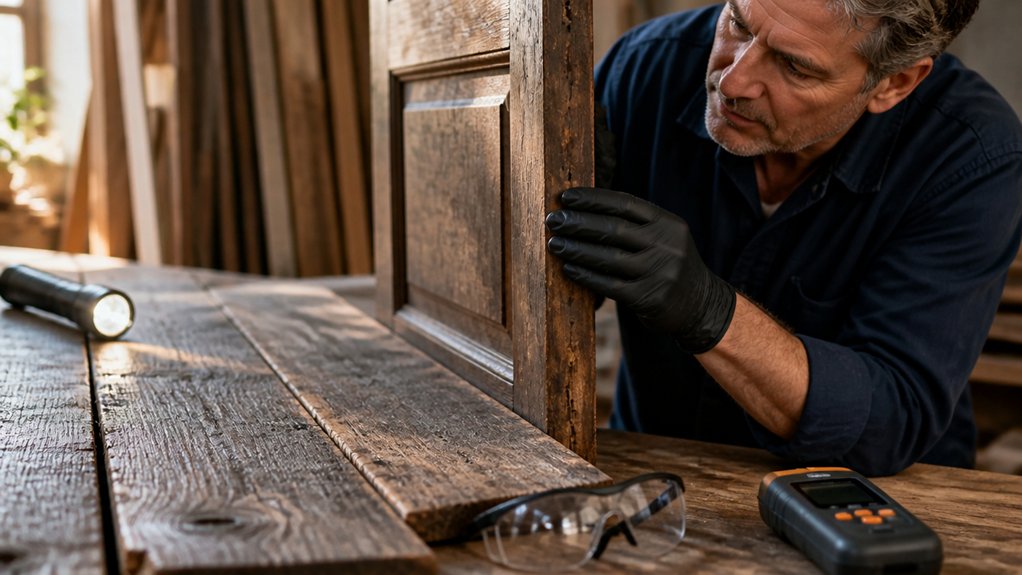
Inspect reclaimed doors and flooring for cracks, rot, loose joints, and other signs of structural damage before incorporating them into your design.
Older paint, flooring, and adhesives may contain lead, asbestos, or other hazardous materials, so have them tested before sanding, cutting, or removing them.
Make sure each piece is stable and operates safely; repair it properly or set it aside if it’s unsafe.
If you’re unsure what to look for, Property Sisters Interiors can help assess your reclaimed materials.
Check for Structural Damage
Reclaimed doors and flooring can add character, but they need to be sound enough for their intended use. Inspect each piece in good light for cracks, splits, rot, insect holes, and loose joints, especially along edges, at corners, and anywhere that will bear weight. Gently press suspicious areas. Wood that feels soft or crumbles may need professional evaluation or replacement.
For doors, check the frame, rails, stiles, and hinge areas. A warped door may not hang or latch reliably, even after refinishing.
For flooring, look for cupping, buckling, broken tongues, and uneven thickness that could make installation difficult. Ask the seller about previous repairs and how the materials were used.
Keep safety in mind: don’t install damaged pieces where failure could cause injury. Before you commit, have a qualified carpenter assess any concerns.
Property Sisters Interiors can also help you evaluate reclaimed materials and plan a suitable use for them.
Test for Hazardous Materials
A beautiful finish doesn’t guarantee a safe material. Before you sand, strip, cut, or install a reclaimed door or floor, check its age, origin, and previous use.
Older paint may contain lead, and some finishes, adhesives, or preservatives may contain other hazardous materials. Don’t rely on appearance or a seller’s assurance.
For painted pieces from homes built before 1978, arrange testing through a qualified professional. If lead is present, follow local requirements and hire certified specialists to remove or encapsulate it—sanding can spread contaminated dust.
Ask a lab or restoration expert to identify unknown coatings and treatments, too. Until testing confirms the material is safe, keep it intact, limit access, and avoid bringing dust into your home.
Document the findings before choosing a finish that preserves the piece’s character. Property Sisters Interiors can help you plan next steps and connect your project with the right expertise.
Assess Stability and Safety
Before choosing a finish or installing a reclaimed door or flooring, check that the material is structurally sound. Look for cracks, rot, loose joints, warping, and insect damage, especially at corners, edges, and areas hidden by old hardware. Gently press on any suspect spots; soft or crumbling wood should be assessed by a professional.
For flooring, make sure the boards lie flat and their tongues and grooves are intact. For a door, confirm that the hinges, frame, and latch can handle regular use. Structural integrity matters as much as patina: repairs should preserve the wood’s character without compromising its strength.
If you’re unsure what to look for, Property Sisters Interiors can help assess your options.
Also consider fire safety. Reclaimed wood may have old coatings or residue, so don’t assume it meets current requirements. Ask your local building official or a qualified contractor about applicable codes, especially for doors near kitchens or required exits. Replace any unsafe pieces before installation.
Restore Reclaimed Doors Without Losing Their Character
When restoring a reclaimed door, preserve the marks that give it character while making sure it works safely and smoothly. Start with a soft brush and mild soap. Avoid aggressive sanding, which can erase tool marks, patina, and layers of antique paint. Test any cleaning or finish-removal method in a hidden spot first. If the paint may contain lead, stop and contact a certified professional.
Tighten loose joints with a suitable adhesive and clamps. Replace only damaged sections, using wood that matches the door’s species and grain as closely as possible. Keep the original hardware if it still works; clean it carefully, lubricate moving parts, and repair distinctive hinges or latches rather than replacing them.
If the door sticks, plane the edge sparingly, then seal any exposed wood with a compatible finish. Choose a low-sheen coating that protects the surface without making the door look brand-new. For help preserving your door’s character while restoring its function, consult Property Sisters Interiors.
Prepare and Install Reclaimed Flooring
Sort reclaimed boards by length and condition. Remove old nails and debris carefully to avoid damaging the edges, then inspect each plank for rot, insect damage, or loose joints. Set aside boards that can’t provide a stable surface.
Let the flooring acclimate in the installation room for several days, and check its moisture level before installation. Make sure the subfloor is clean, dry, level, and secure.
Plan the layout to distribute variations in tone and width evenly, saving distinctive boards for prominent areas. Use fasteners suited to the wood species and installation method, and leave the recommended expansion gap around the perimeter.
If you need replacement boards, look for sustainably sourced options that complement the reclaimed wood. Careful preparation can preserve the floor’s patina while creating a durable, cohesive finish.
For help planning or installing your reclaimed flooring, contact Property Sisters Interiors.
Pair Reclaimed Doors and Floors With Modern Finishes
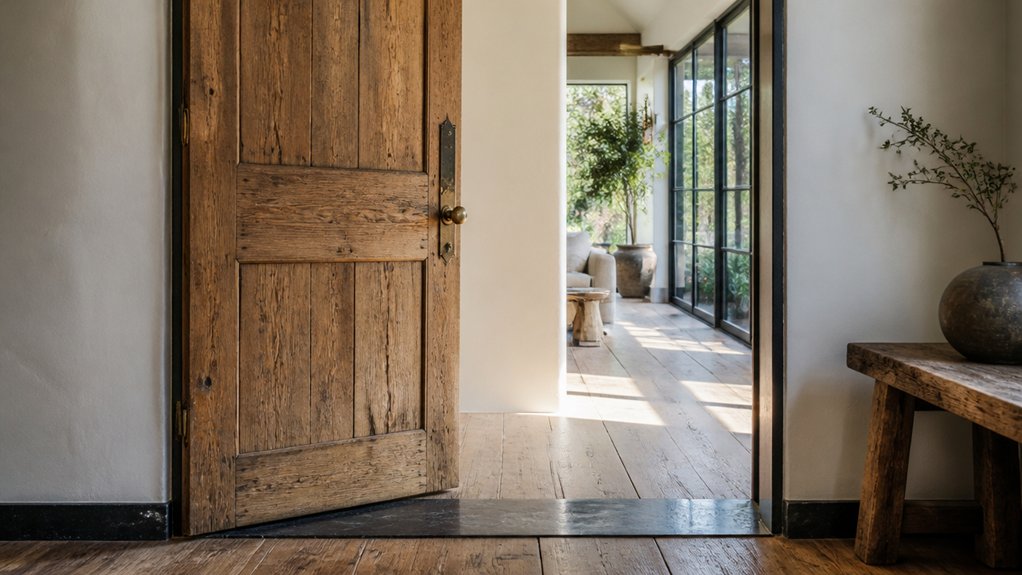
Reclaimed doors and floors bring warmth, texture, and history to a room. Modern finishes keep the look balanced and current. Pair weathered wood with crisp paint, streamlined hardware, and simple lighting to create a thoughtful mix rather than a period-style interior.
Choose one or two contemporary materials—such as matte black metal, polished stone, or smooth plaster—and repeat them throughout the space for cohesion.
Let the wood’s grain and patina take the lead. Avoid competing patterns and overly ornate furnishings. For vintage charm with a fresh edge, use a reclaimed door as a focal point against clean, neutral walls.
Balance dark, aged timber with pale cabinetry or restrained metal accents for a modern contrast. Test paint and finish samples beside the wood in both natural and evening light, then adjust the tones before committing. This helps keep the palette cohesive while preserving the wood’s character.
For help bringing the materials together, Property Sisters Interiors can offer expert guidance.
Frequently Asked Questions
Can Reclaimed Doors and Floors Increase a Home’s Resale Value?
Yes, reclaimed doors and floors can add resale appeal when they’re in good condition and suit the home’s style. Their character and craftsmanship may help a home stand out, but the return depends on the quality of the restoration and what local buyers prefer. For help choosing and styling reclaimed materials, contact Property Sisters Interiors.
Are Reclaimed Materials a Sustainable Choice Compared With New Products?
Yes—reclaimed materials can reduce waste and avoid some of the environmental impacts of producing new products. Their overall impact depends on factors such as transportation, restoration, durability, and whether they contain hazardous finishes. Weigh those considerations before choosing, and consult Property Sisters Interiors for expert guidance if you need help evaluating an item.
How Can I Estimate the Cost of a Reclaimed Renovation Project?
Estimate reclaimed renovation costs by measuring the quantities you need and researching current material prices. Account for delivery, cleaning or restoration, installation, and a contingency for unexpected work. Compare supplier quotes and inspect materials for condition, sizing, and any repairs they may require. Then prioritize the reclaimed features that matter most to your home and budget. For help weighing your options, you can consult the experts at Property Sisters Interiors.
Do Reclaimed Doors and Floors Require Special Ongoing Maintenance?
Yes, reclaimed doors and floors benefit from regular care, but their maintenance is generally straightforward. Dust or sweep often, wipe up spills promptly, and use cleaners suited to the wood and its finish. Add rugs or other protection in high-traffic areas, and refresh the protective finish when it shows signs of wear. For guidance on caring for a specific piece or floor, Property Sisters Interiors can help.
Can Reclaimed Materials Work Well in Humid or Coastal Climates?
Yes. Reclaimed materials can work well in humid or coastal climates when you choose moisture-resistant materials, apply an appropriate finish, and allow for good ventilation. In coastal areas, check for salt buildup, leaks, and finish damage, and address issues promptly. For help choosing materials and finishes, contact Property Sisters Interiors.
Conclusion
Reclaimed doors and floors bring history and warmth into a home, but choosing well takes care. Check each piece’s source, dimensions, condition, and safety before you buy. Look for signs of pests, rot, lead paint, or other hazards, and ask a qualified professional to assess anything you’re unsure about. Clean and repair the material, let wood acclimate to your home, and follow appropriate installation guidance. Preserve distinctive details when possible, then balance weathered surfaces with modern lighting or matte-black hardware for a fresh, polished look. For help sourcing or styling reclaimed materials, Property Sisters Interiors can guide you through the process.