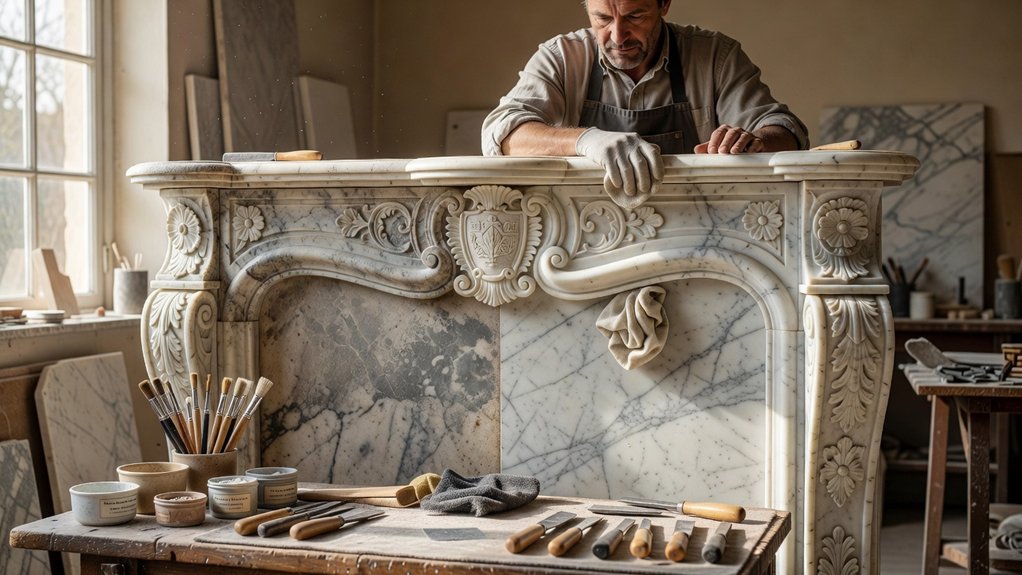
Restoring a vintage marble fireplace is like uncovering a stone portrait—each mark tells part of its story. Begin by inspecting the surround, hearth, and joints for cracks, loose pieces, or stains, and take photos to document their condition. Clean gently with a pH-neutral stone cleaner and a soft cloth; avoid acidic products and abrasive tools, which can etch or dull marble. If you find deep stains, significant cracks, or loose sections, pause before attempting repairs. A marble specialist can recommend a safe approach, and Property Sisters Interiors can help you decide on the next steps.
Key Takeaways
- Inspect the mantel, legs, hearth, and joints in bright, indirect light. Photograph any damage, and consult a restoration professional if you notice movement or instability.
- Clean gently with a soft cloth, a small amount of water, and pH-neutral soap. Avoid acids, abrasive cleaners, and products you haven’t tested on an inconspicuous spot.
- Blot soot and spills rather than scrubbing. For oily stains, use a marble-safe poultice after testing it first; seek specialist advice for persistent discoloration.
- Use marble-specific filler for minor chips. Leave deep cracks and extensive damage to a restoration professional.
- Test any stone polish or sealer before applying it broadly. Dust regularly, and confirm the fireplace is structurally safe before lighting a fire. For expert guidance, contact Property Sisters Interiors.
Inspect Your Vintage Marble Fireplace
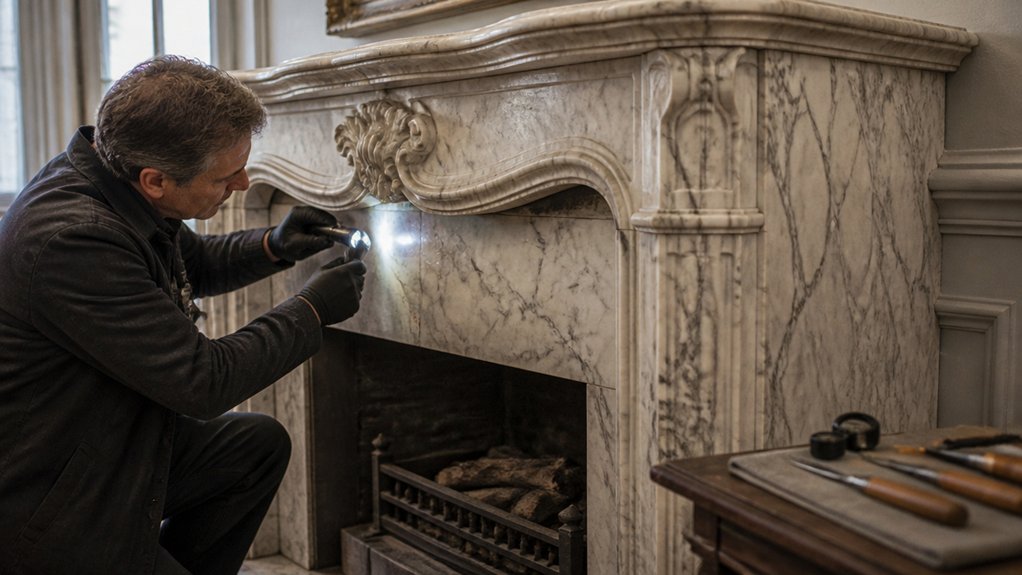
Before cleaning or repairing a vintage marble fireplace, inspect it carefully for damage and signs of previous treatments. Use bright, indirect light to examine the mantel, legs, hearth, and joints. Look for cracks, chips, loose pieces, stains, discoloration, and gaps between marble sections. Note whether the damage seems recent or has developed gradually.
Check for paint, wax, sealant, or other coatings, but don’t scrape or test them during your initial inspection. Photograph each area and record its location, size, and appearance. This documentation can help you track changes and explain your concerns to a conservator.
Consider the fireplace’s age, materials, and original construction. Understanding its history and design can help you recognize period details and avoid altering significant features. If stones move, cracks widen, or the support seems unstable, contact a qualified restoration professional before proceeding.
Property Sisters Interiors can also help you determine the right next step.
Clean Your Marble Fireplace Without Damage
After documenting the fireplace’s condition, gently remove loose dust with a soft microfiber cloth or clean, soft-bristle brush. Work across the marble and into carved details without scrubbing or pressing hard.
For routine cleaning, dampen a clean cloth with warm water and wipe a small section at a time, using as little water as possible. Marble can absorb moisture through porous areas and seams. If needed, add a few drops of pH-neutral soap, then wipe the surface with a separate cloth dampened with plain water. Dry each section immediately with a soft towel to help prevent water marks.
Avoid vinegar, lemon, abrasive pads, and acidic or gritty cleaners, which can etch or scratch marble. Test any cleaning product on an inconspicuous spot first.
Gentle care helps preserve the stone’s finish and supports ongoing fireplace maintenance. If you’re unsure how to clean or care for your marble fireplace, Property Sisters Interiors can offer expert help.
Remove Soot and Stains From Marble
If soot or a stain remains after gentle cleaning, identify the mark before treating it. Soot can smear when rubbed, while spills may leave a stain beneath the surface.
Blot fresh residue with a dry, soft cloth, lifting loose soot without scrubbing or adding water.
For oily marks, use a marble-safe poultice according to the product label. Test it on an inconspicuous spot first, and avoid acidic cleaners, bleach, and abrasive pads, which can etch or dull marble.
Follow the poultice directions, then remove it gently and wipe the area with a damp cloth.
If discoloration persists, stop and consult a stone-care specialist before trying stronger treatments or repeating the application.
Property Sisters Interiors can help you find expert support for caring for your marble.
Repair Chips and Cracks: or Call a Pro
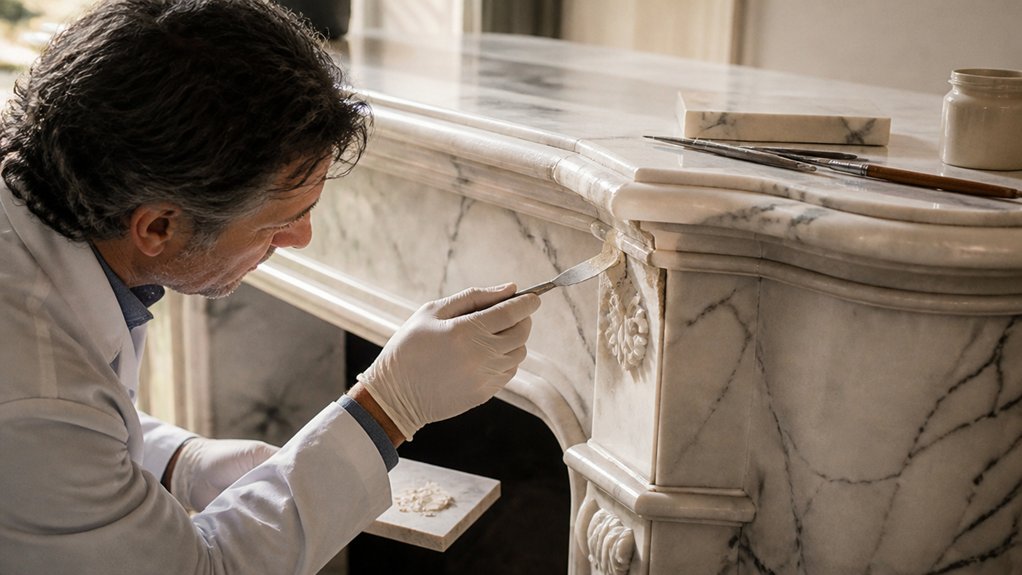
Check each chip or crack for its depth, length, and location. Damage near an edge or support can point to a structural issue.
Small, shallow chips can often be repaired with a marble-specific filler; avoid ordinary household adhesives.
For deep cracks, loose pieces, or damage that extends across the surround, contact a marble restoration professional.
Property Sisters Interiors can help you assess the damage and find the right next step.
Assessing Chips and Cracks
Before choosing a repair, assess how deep and widespread the damage is. Gently clean the area with a soft cloth, then inspect it in bright, indirect light. Measure each chip or crack with a ruler and take photos for reference. Note whether a crack reaches an edge, crosses a joint, or branches through the marble—these details can help you track changes.
Avoid probing with metal tools or pressing on the damage, since either can widen a fracture.
Compare the damaged area with nearby stone before judging its appearance. Variations in marble color can make a shallow chip look more noticeable, while an old repair may conceal earlier damage. If the fireplace has historical significance, document original finishes and markings before making changes.
You can lightly mark crack endpoints with removable tape and check them periodically for movement or growth. If you’re unsure how serious the damage is, Property Sisters Interiors can help assess the marble and recommend next steps.
When to Call a Pro
Small, stable chips may be suitable for a careful DIY repair. Call a marble-restoration professional if a crack is growing, crosses a joint, reaches an edge, or runs through the stone. These signs may point to movement or structural weakness that filler alone can’t fix.
Seek expert help if pieces feel loose, the fireplace has shifted, or previous repairs have failed. A specialist can assess the marble, identify the cause, and recommend compatible adhesives and fillers that won’t damage the surface.
For a historically significant fireplace, consult a conservator before altering the original material; unsuitable products may reduce its value. A professional can also match the marble’s color, veining, and finish for a discreet repair.
For expert help, contact Property Sisters Interiors. Don’t use the fireplace until a professional confirms that the damaged stone and surrounding components are safe.
Polish and Seal Marble Only If Needed
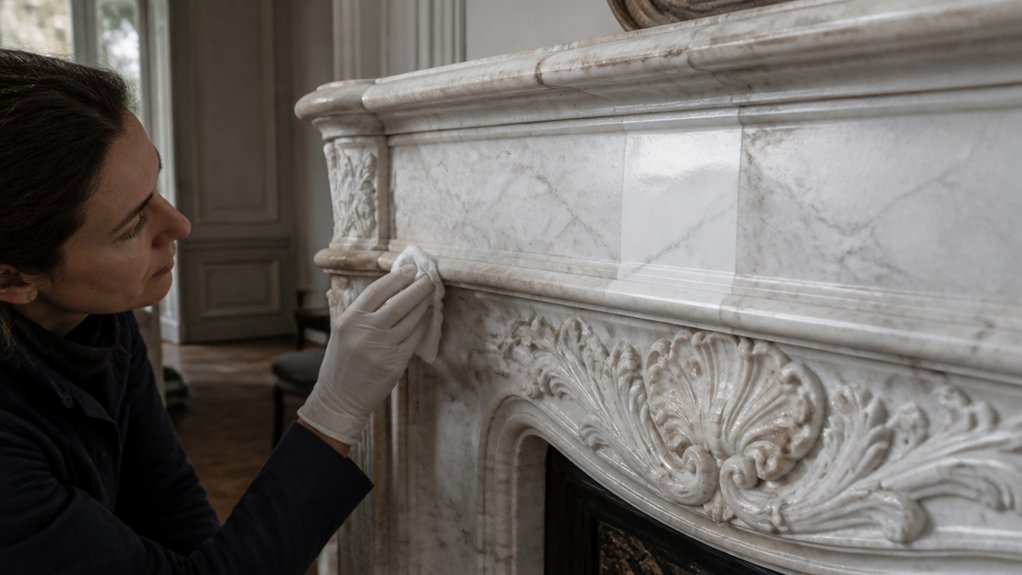
If the marble still looks dull after cleaning, use a polish made specifically for natural stone and follow the label directions. Test it on an inconspicuous spot first, then work in small sections with a soft cloth.
Avoid abrasive pads, acidic cleaners, and products not confirmed as safe for your fireplace’s marble. Polishing may improve a worn surface, but it won’t fix deep scratches, chips, or etching. For those issues, consult a stone specialist or get expert help from Property Sisters Interiors.
Seal the marble only if it readily absorbs water or the manufacturer recommends sealing. Choose a breathable sealer labeled safe for marble, and test it in a discreet area before treating the visible surface.
Apply it evenly, let it sit for the specified time, and remove any excess as directed. Following the product instructions can help prevent residue, streaks, and unwanted changes in appearance.
Preserve Your Marble Fireplace for Years
Dust your marble fireplace regularly with a soft, dry cloth, and wipe up spills promptly with a pH-neutral stone cleaner. Blot liquids rather than rubbing, and avoid vinegar, abrasive pads, and acidic products, which can etch the surface.
Place candles, plants, and metal accessories on protective trays to help prevent stains and scratches.
Use the firebox only if the fireplace is structurally sound and designed for burning. Heat and soot can damage marble, so consult a qualified professional if you’re unsure.
Periodically check the joints and surrounding wall for cracks or moisture, and address any issues early. Photographing the mantel each year can help you track changes and plan maintenance.
Learning about marble’s history can help you appreciate its original finish, while period details can inspire thoughtful updates that preserve the fireplace’s character.
For expert guidance, you can also reach out to Property Sisters Interiors.
Frequently Asked Questions
How Can I Identify the Age and Origin of a Vintage Marble Fireplace?
Estimate a vintage marble fireplace’s age by examining its carving style, tool marks, hardware, and construction. Look for maker’s marks, invoices, or architectural records for clues about when it was made. The marble’s veining may also suggest its quarry origin, though a specialist can help confirm it. For expert guidance, contact Property Sisters Interiors.
What Styles of Vintage Marble Fireplaces Are Most Collectible?
Georgian, Regency, and Art Deco marble fireplaces are often the most collectible, thanks to their distinctive designs and lasting appeal. Look for unusual marble patterns, original mantels, documented provenance, and sound condition. When restoration is needed, careful work can preserve value without erasing character. Property Sisters Interiors can help you assess a fireplace and plan a thoughtful restoration.
Where Can I Find Replacement Parts for a Discontinued Fireplace Design?
You can find rare components through antique dealers, architectural salvage yards, fireplace specialists, and online marketplaces. Share your fireplace’s model number, measurements, and photos, and ask sellers to confirm compatibility before you buy. For help tracking down the right part, contact Property Sisters Interiors.
Do Historic Preservation Rules Apply to Restoring a Vintage Fireplace?
Historic preservation rules may apply, so check before restoring a vintage fireplace. If your home is a designated landmark or in a historic district, local guidelines may affect the materials, finishes, or repairs you can use. Contact your local preservation office to find out whether you need permits or approval. For help planning a restoration, Property Sisters Interiors can offer expert guidance.
How Much Does Professional Restoration Typically Cost?
Professional restoration costs vary based on the material, condition, and work required. Extensive damage or replacement materials can increase the total, so ask contractors to itemize the restoration methods, repairs, labor, and protective finishes before approving a budget. For expert guidance, contact Property Sisters Interiors.
Conclusion
Restoring a vintage marble fireplace takes patience, not force. Inspect the stone and joints before you begin, then clean with a pH-neutral product and a soft cloth. For soot or stains, use a poultice suited to the type of stain and marble; test it in an inconspicuous spot first. A marble-specific filler may work for minor chips, but leave structural cracks or uncertain repairs to a qualified stone professional. Polish or seal only when the marble needs it, and protect the surface from spills, acidic cleaners, and abrasives. If you’d like expert guidance, Property Sisters Interiors can help you plan a careful restoration that preserves your fireplace’s character for years to come.