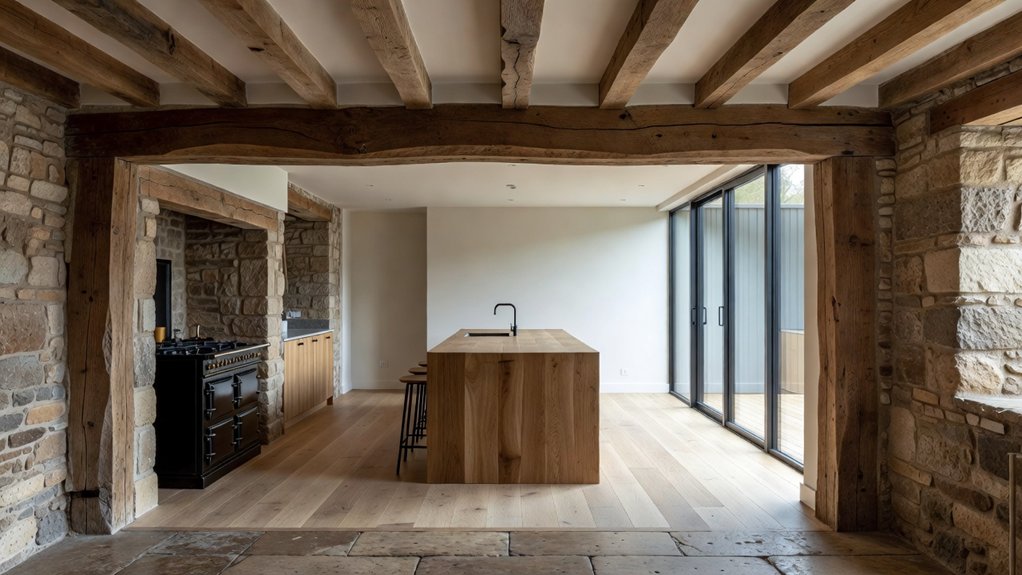
You may find that the kitchen you want to extend already has the details that make your period home distinctive. As you plan for more space, balance practical upgrades with original beams, windows, and finishes. Check local permitting and historic-preservation requirements early, and make a plan to protect character features during construction. Then consider how new materials, lighting, and appliances can complement the original details. An early design decision can shape the entire project—especially if the existing layout isn’t working. Property Sisters Interiors can help you plan an extension that feels practical and true to your home.
Key Takeaways
- Check local planning, building, and historic-preservation requirements, and secure any needed approvals before finalizing plans or starting construction.
- Document and protect original features such as beams, fireplaces, stained glass, floors, and decorative woodwork.
- Design the addition to work with the home’s existing architecture, preserving important sightlines, window proportions, natural light, and safe clearances.
- Create a natural transition between old and new spaces with complementary materials, consistent floor levels, and repeated details such as trim or hardware.
- Plan appliances, lighting, finishes, and any underfloor heating early so the kitchen feels modern and functional without overpowering the home’s character. Property Sisters Interiors can help homeowners balance practical upgrades with period details.
Check Permissions for a Period Property Kitchen Extension
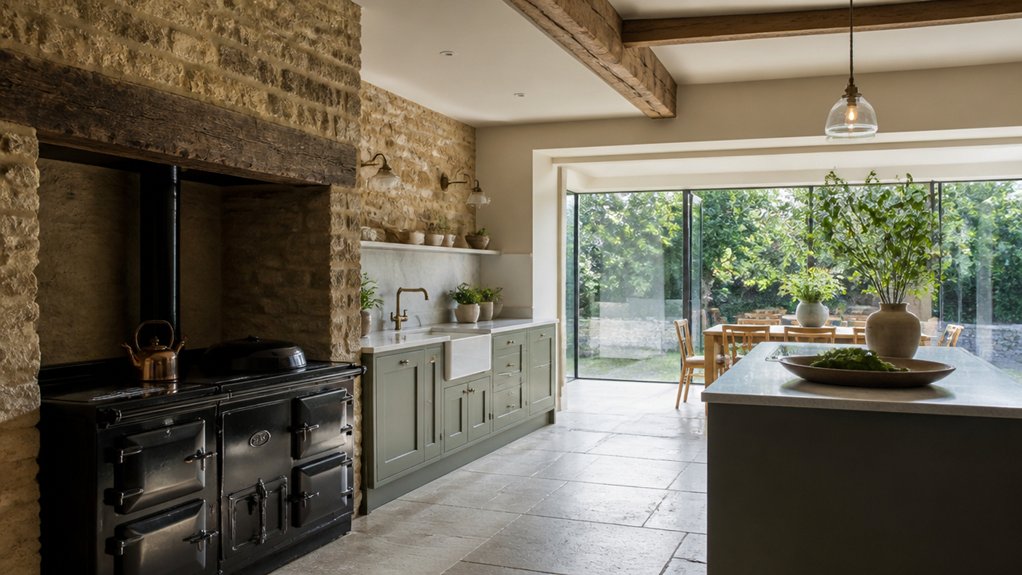
Before planning an extension, check which approvals your historic home may need. Contact your local planning department to ask whether the project requires planning approval, historic-preservation review, or both. Requirements vary by location, the property’s designation, and the extension’s size and design.
If your home is in a historic district, don’t assume a modest kitchen addition is exempt from review.
Prepare drawings that show the proposed footprint, roofline, materials, and connection to the existing house. Clear, well-proportioned plans help reviewers assess how the addition will affect the home and its surroundings.
Research your home’s age and architectural style before choosing details, or ask an experienced designer for guidance. Property Sisters Interiors can help you develop a sympathetic design.
Ask your local department about preliminary review, and secure required approvals before hiring builders or starting work.
Protect Original Features During Building Work
Once approvals are in place, protect original features before construction begins. Photograph each room and note cracks, loose plaster, worn floors, and decorative details. Share this record with your contractor so you can distinguish preexisting damage from damage caused by the work.
Agree on which features need protection and how. Cover floors with breathable boards, wrap vulnerable woodwork in padded materials, and shield fireplaces, cornices, and stained glass from dust and impact. Avoid adhesive tape on delicate finishes, and test protective coverings in an inconspicuous spot first.
Ask your contractor to mark protected areas clearly and brief every trade before work starts. Store removable hardware, tiles, and period-specific fixtures in labeled, dry containers. Schedule regular checks, especially during demolition, and address problems promptly.
Careful handling helps preserve a home’s historic character and keeps more options open for future repairs. For help planning protection around original features, consult an experienced preservation professional or Property Sisters Interiors.
Link the New Kitchen to the Old House
To connect your new kitchen with the old house, echo original materials such as brick, timber, or stone. Preserve architectural details, including cornices, window proportions, and floor levels.
A subtle change in flooring or ceiling treatment can help distinguish the new space while keeping the home’s overall character. For guidance on balancing old and new, Property Sisters Interiors can help.
Match Original Materials
A successful kitchen extension feels connected to the original home without simply copying it. Choose materials that suit the house’s age and setting while standing up to the demands of a busy kitchen. Reclaimed brick, natural stone, wood, or handmade tile can add warmth and texture without making the new space feel like a replica.
Look at the features that already work: original walls, floors, and cabinetry can help guide your palette and finishes. Historic craftsmanship often has subtle variations that give older materials their character. You can echo that quality with carefully sourced reclaimed pieces or well-made contemporary alternatives.
Before committing, check that materials are suitable for kitchen conditions, including moisture, heat, and everyday wear.
A thoughtful mix of old and new can help your extension feel settled, practical, and distinctly yours while maintaining a clear connection to the home. For help choosing materials and finishes, you can consult the experts at Property Sisters Interiors.
Respect Architectural Details
Materials set the tone, but architectural details help an extension feel at home. Look beyond finishes to the proportions and features that give your period house its character. Align new door and window openings with existing sightlines, and echo the original ceiling height or cornice profile where practical. If the adjoining room has deep baseboards, consider a similar scale in the kitchen rather than copying every detail.
Choose cabinet hardware, faucets, and lighting that suit the home’s era without compromising modern performance. Plan task lighting around work areas while respecting the character of existing fixtures. Arrange furniture to keep original fireplaces, beams, and alcoves visible and accessible.
The result can feel thoughtful, functional, and connected to your home’s architectural style. For help balancing period details with modern needs, Property Sisters Interiors can offer expert guidance.
Create a Visual Transition
Even when your new kitchen has a contemporary layout, a few visual cues can connect it to the older rooms. Repeat a detail from the original architecture, such as a molding profile, door-panel shape, or wood finish. You don’t need to copy every feature; a restrained reference can make the transition feel intentional.
Choose materials that complement your home’s existing palette. Warm wood, natural stone, or aged brass can nod to traditional craftsmanship without making the addition feel like a replica. If the kitchen opens directly onto a period room, align the floor heights and consider choosing flooring in a similar tone to create a sense of flow.
Keep modern elements simple, and let a few carefully chosen details add character. A familiar color, traditional hardware, or salvaged feature can link old and new while keeping your kitchen fresh and functional. Property Sisters Interiors can help you find the right balance for your home.
Design Around Beams, Windows, and Fireplaces
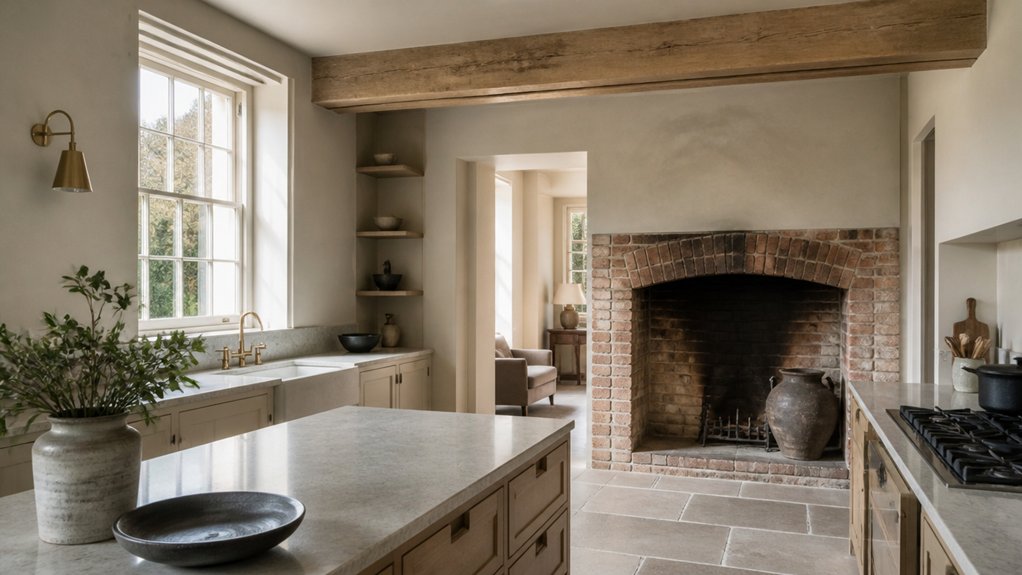
Period features can shape your kitchen layout rather than get in its way. Map beams, windows, and fireplaces before finalizing your extension plan. Their locations affect sightlines, traffic flow, and where cabinetry and appliances can go.
Keep structural beams visible when they add character, and plan ceiling heights around them. If a beam crosses a main walkway, adjust the island or counters to maintain comfortable headroom and clear passage.
Use window frames to make existing openings feel intentional in the new layout. When practical, align nearby counters with the windowsill, and avoid blocking natural light with tall cabinets.
A fireplace can anchor a dining or seating area, but leave enough clearance for safe use and easy access. Let each feature guide the design so the kitchen feels balanced and connected to the home’s original architecture.
For help planning around these details, contact Property Sisters Interiors.
Choose Materials That Suit Your Period Home
Choose finishes that feel at home with your property’s original details. In a Victorian or Edwardian kitchen, consider painted cabinets paired with natural stone, wood, or ceramic tile.
In a cottage, simple Shaker-style cabinets, warm wood, and handcrafted-looking surfaces can feel right at home. Let your home’s age and character guide the palette instead of copying a period style too literally.
Balance old and new with thoughtful details. Vintage appliances can add authentic color and shape, while period-inspired lighting, such as enamel pendants or brass wall sconces, can reinforce the room’s character.
Choose hardware that complements existing features, and select tile patterns or flooring that suit the home’s proportions. Before committing, test samples in the room’s changing light.
A restrained mix of textures can help an extension feel connected to the original house rather than like a separate style statement. For help bringing these elements together, Property Sisters Interiors can offer expert guidance.
Add Modern Comfort Without Losing Character
Preserve your home’s character while making the kitchen work for modern life. Choose modern appliances that perform reliably without dominating the room. Integrated refrigerators, discreet induction cooktops, and quiet dishwashers keep sightlines calm, while cabinetry can conceal everyday equipment. Check dimensions and ventilation requirements early so your extension can accommodate each appliance without awkward gaps or costly changes.
Layer lighting to support cooking, dining, and the architectural details you want to highlight. Combine focused task lighting under cabinets with pendants over an island and softer ambient light on dimmers.
Choose finishes that complement period features—such as aged brass or simple opal glass—rather than compete with them. If you’re adding radiant floor heating, plan the controls and zones before installation.
For help balancing modern comfort with your home’s original proportions and materials, Property Sisters Interiors can guide you through the design choices.
Frequently Asked Questions
How Long Does a Period Property Kitchen Extension Usually Take?
Construction typically takes 12–20 weeks, with several more weeks for design, approvals, and sourcing. Matching original materials and integrating the new kitchen with the period home can add time, as can unexpected structural issues. Property Sisters Interiors can help you plan the project and navigate these details.
What Budget Should I Set for Extending a Period Property Kitchen?
Costs vary based on the extension’s size, structural work, location, materials, and period details. Build a realistic budget with a contingency for unexpected work, and ask Property Sisters Interiors for expert help planning your project.
How Can I Choose a Builder Experienced With Period Homes?
Choose a builder with experience restoring period homes, such as Victorian houses. Ask to see completed projects and speak with past clients. Discuss how the builder will match original materials and details—like brickwork—while integrating modern features such as cabinetry. Confirm who will handle any required historic-preservation approvals and how the team will protect your home’s character during construction. For help evaluating design choices, you can also consult Property Sisters Interiors.
Will a Kitchen Extension Affect My Home Insurance?
Yes, a kitchen extension can affect your homeowners insurance by increasing your home’s rebuilding cost or changing its risk profile. Contact your insurer before work begins to check whether your policy needs updating and whether you need additional coverage during construction. Property Sisters Interiors can also help you plan your project and understand the practical considerations.
How Can I Reduce Disruption While the Kitchen Extension Is Built?
Plan a temporary living setup before construction begins, and agree on a clear work schedule with your contractor. Reduce noise with measures such as acoustic screens, and protect nearby rooms from dust and debris. A compact temporary kitchenette can help keep daily routines manageable. For help planning around the disruption, contact Property Sisters Interiors.
Conclusion
Extend your period kitchen thoughtfully, and you can create a space that suits modern life while honoring your home’s history. Check local permits and approvals early, and protect original features from dust and damage during construction. Let beams, windows, and fireplaces shape the layout. Choose finishes that complement the house, and integrate appliances and lighting with a light touch. For help balancing character and function, consult Property Sisters Interiors. Done well, your new kitchen will feel at home in the house—and ready for many meals to come.